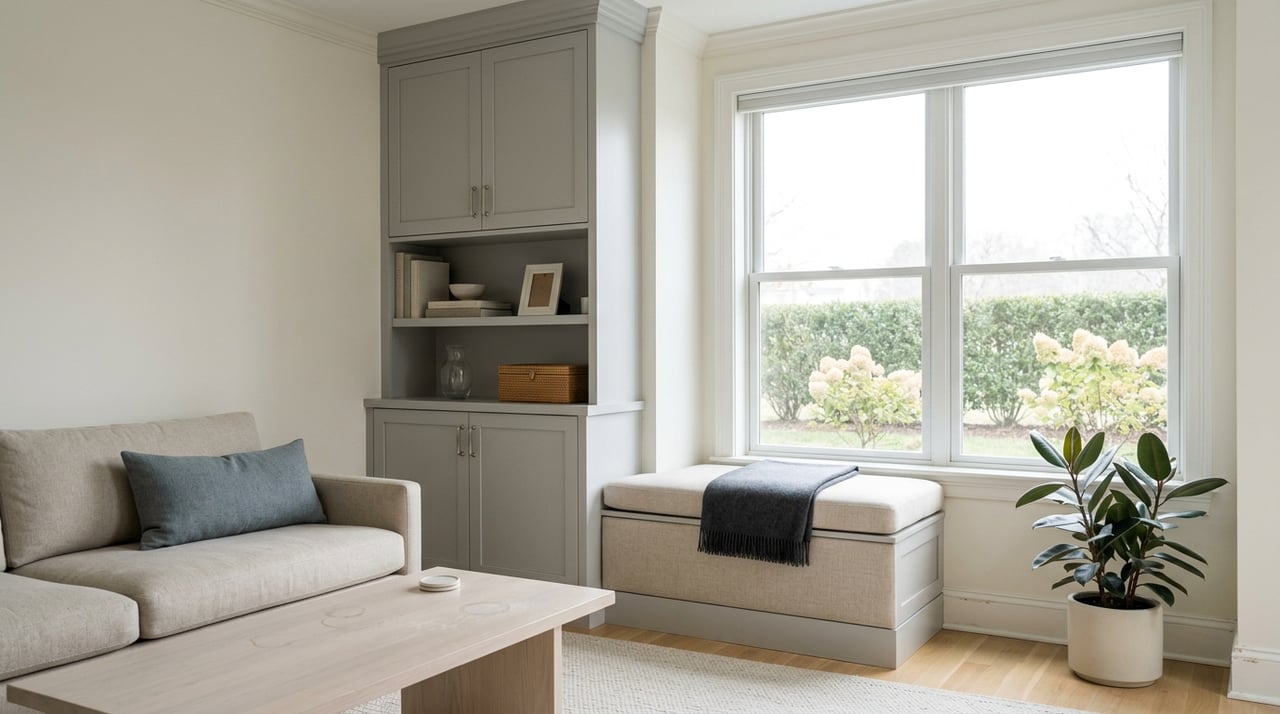
Ready for less upkeep and more freedom? If you are thinking about downsizing to Yarmouth, you are not alone. In a town where 20.2% of residents are age 65 or older, many homeowners are weighing how much space they truly need, what their monthly costs look like, and how they want daily life to feel. The good news is that right-sizing here can mean more than just moving into a smaller house. It can mean choosing a home that better fits how you want to live, from walkable Village access to easier maintenance and flexible layouts. Let’s dive in.
Why Yarmouth works for downsizing
Yarmouth offers a mix of stability, convenience, and lifestyle appeal that can make a smaller home feel like a smart next step. The town’s estimated 2024 population is 9,060, and owner-occupied housing makes up 80.4% of homes. That points to a market where many residents put down roots and think carefully about long-term fit.
For many downsizers, finances are part of the picture too. Census data shows a median owner-occupied home value of $639,700, with median monthly owner costs of $2,855 with a mortgage and $1,120 without one. If you have built equity in your current home, right-sizing in Yarmouth may be less about finding the cheapest option and more about finding the best balance of comfort, access, and manageable costs.
Think beyond square footage
A successful downsize is not only about going smaller. It is about choosing a home that supports your routine with less effort. In Yarmouth, that often means focusing on layout, location, and maintenance rather than simply the number of bedrooms.
The town’s planning documents make that especially clear. Yarmouth’s Village is described as the historic social and civic center, with Main Street businesses and restaurants, historic buildings, schools, walking and biking paths, Royal River Park, and denser housing that supports daily convenience. If you want less house but more connection, that setting may matter as much as the home itself.
What housing options you may find
Yarmouth still leans heavily toward detached homes, but there is more variety than many buyers expect. According to the town’s comprehensive plan, occupied housing includes 67.7% single-family detached homes, 10.6% single-family attached homes, 4.4% two-unit structures, 5.3% buildings with 3 to 4 units, 5.9% buildings with 5 to 9 units, 5.0% buildings with 10 or more units, and 0.9% mobile homes.
That matters because downsizing does not have to mean one path. You may be choosing between a smaller detached home, an attached property, a condo-style setup, an apartment, or a home with flexible living arrangements. Most of Yarmouth’s year-round housing was built between 1960 and 1999, so it is also wise to look closely at updates, accessibility, and ongoing maintenance needs.
Condo and attached-home options
Yarmouth’s comprehensive plan points to local attached and condo-style developments such as Yarmouth Bluffs, Blueberry Cove, Brookside, and Riverbend. These kinds of properties can appeal to buyers who want open space and a smaller footprint without taking on the full demands of a larger lot.
There are also multiple-unit and mixed-use buildings in the Village. For some buyers, that can create a more connected, low-maintenance lifestyle with easier access to daily destinations.
Age-targeted and apartment options
If you are specifically looking for age-targeted housing, the town reports a pipeline of 76 approved but unpermitted units, including 51 condominium units for households age 55 and older. That suggests more options may continue to come into the market over time.
Yarmouth is also home to Bartlett Woods, a community for residents age 55 and older with efficiency, one-bedroom, and two-bedroom apartments. For some downsizers, a rental or apartment-style option can be the right bridge between a longtime family home and a lower-maintenance next chapter.
What to prioritize when right-sizing
When you tour homes in Yarmouth, it helps to screen them through the lens of everyday ease. A beautiful property can still be the wrong fit if it creates too much work or limits how comfortably you can move through your day.
Here are some practical questions to keep front and center:
- Is the home single-level, or does it offer elevator access if needed?
- How much storage is available for the things you truly want to keep?
- How much exterior maintenance will fall on you?
- How close is the home to the Village, trails, parks, or coastal access?
- Does the layout give you enough flexibility for guests, hobbies, or a home office without adding unused space?
These questions line up well with what makes Yarmouth distinctive. In many cases, the best downsize is the one that reduces chores while improving how easily you can enjoy the town.
Why location inside Yarmouth matters
Not every downsize in Yarmouth will look the same. Some buyers want to be close to the Village for a more walkable routine. Others want a quieter setting with easy access to trails, parks, or the water.
The town’s comprehensive plan describes residential neighborhoods in the Growth Area as largely walkable and bikeable, with access to trails and open spaces. It also supports more housing diversity in and around the Village, including infill buildings, accessory dwelling units, small lots, and context-appropriate multifamily housing. That local direction reinforces the idea that a smaller, well-located home can be a very practical fit here.
Village access and daily convenience
If your goal is to drive less and do more close to home, the Village stands out. The area combines civic, social, and commercial uses in one central setting, which can make daily errands and casual outings feel simpler.
For many downsizers, this is where the tradeoff starts to make sense. You may give up extra square footage, but gain easier access to restaurants, local businesses, parks, and walking paths.
Trails, parks, and outdoor access
A smaller home often feels like a better value when the town itself becomes part of your living space. Yarmouth offers strong public outdoor assets, including Beth Condon Memorial Pathway, Royal River Park, Pratt’s Brook Park, and Yarmouth Town Landing.
Pratt’s Brook Park alone includes about 220 wooded acres, 7 miles of trails, some universal access, picnic areas, and river access. The state’s coastal access guide also notes Old Town Landing and Grist Mill Park, with Old Town Landing offering a small pebble beach and protected cove, and Grist Mill Park offering river views and a path to the Royal River.
Consider transportation and mobility
Downsizing often comes with a bigger question: how easy will it be to get around in the years ahead? Yarmouth is actively working on that piece too. The town’s April 2025 implementation matrix notes ongoing work to improve bus-stop accessibility, sidewalk and trail connectivity, and transit options, including continued discussion of a Route 7 extension while maintaining BREEZ service.
That does not mean every location will feel the same, but it does mean mobility and connection are part of Yarmouth’s current planning efforts. If future ease of movement matters to you, it is worth comparing properties not just by price and size, but by how connected they feel.
ADUs and flexible living arrangements
Some downsizers are not looking for a traditional smaller home at all. You may want space for a family member, a caregiver, or a more flexible in-law setup while still reducing the burden of your current property.
Yarmouth has updated its zoning to implement LD 2003 and expand accessory dwelling unit allowances in the Growth Area. That may open the door to more options for multigenerational living or smaller-footprint housing with built-in flexibility. If this kind of setup interests you, it is important to look closely at the specific property and how the space is configured.
How to prepare before you move
A smooth downsize starts well before you list or buy. The more clarity you have on your priorities, the easier it is to recognize the right fit when it appears.
Start with these steps:
- Define your why. Decide whether your main goal is lower maintenance, easier access, lower monthly costs, a better layout, or a combination.
- Review your current equity and carrying costs. In Yarmouth, where home values and monthly ownership costs are meaningful, this step can shape your options.
- Separate needs from habits. You may be used to extra rooms or storage, but that does not always mean you still need them.
- Tour with lifestyle in mind. Pay attention to stairs, entryways, parking, storage, and how close you are to the places you enjoy.
- Plan your editing process early. Downsizing gets easier when you start sorting what to keep, donate, sell, or pass along before the move feels urgent.
The best downsize is a lifestyle match
In Yarmouth, downsizing works best when you think of it as a lifestyle decision, not a simple square-footage cut. The town offers a mix of established neighborhoods, Village-centered living, outdoor access, and a range of housing types that can support a more manageable next chapter.
If you choose well, right-sizing can leave you with less upkeep and more room for the parts of life you actually use. That might mean a single-level layout, a condo near the Village, a home with flexible living space, or simply a property that lets you spend more time enjoying Yarmouth and less time managing your house.
If you are considering a move in Yarmouth, Mary Libby can help you weigh your options, understand local housing choices, and find a home that fits the way you want to live.
FAQs
What does downsizing in Yarmouth really mean?
- Downsizing in Yarmouth often means matching your home to your lifestyle, with a focus on layout, maintenance, storage, and access to places like the Village, parks, and trails rather than just choosing a smaller property.
What types of downsizing homes are available in Yarmouth?
- Yarmouth includes single-family homes, attached homes, condo-style developments, multi-unit buildings, mixed-use Village housing, mobile homes, and some age-targeted options such as 55+ housing.
Is Yarmouth a good place for a lower-maintenance lifestyle?
- Yarmouth can be a strong fit for a lower-maintenance lifestyle because it offers walkable and bikeable areas, public parks and trails, Village amenities, and housing types that may require less upkeep than a larger detached home.
Are there 55+ housing options in Yarmouth?
- Yes. Yarmouth has existing 55+ housing at Bartlett Woods, and the town has also reported approved but unpermitted condominium units intended for households age 55 and older.
What should I look for when touring downsizing homes in Yarmouth?
- Focus on practical features such as single-level living or elevator access, storage, exterior upkeep, layout flexibility, and proximity to the Village, trails, parks, and coastal access points.
Can accessory dwelling units support downsizing in Yarmouth?
- They may. Yarmouth has expanded accessory dwelling unit allowances in the Growth Area, which can be relevant if you are considering multigenerational living or a smaller-footprint setup with flexible space.